
Composite doors vs standard UPVC doors: security, insulation and a finish that lasts. An honest side-by-side from the team who fit both.
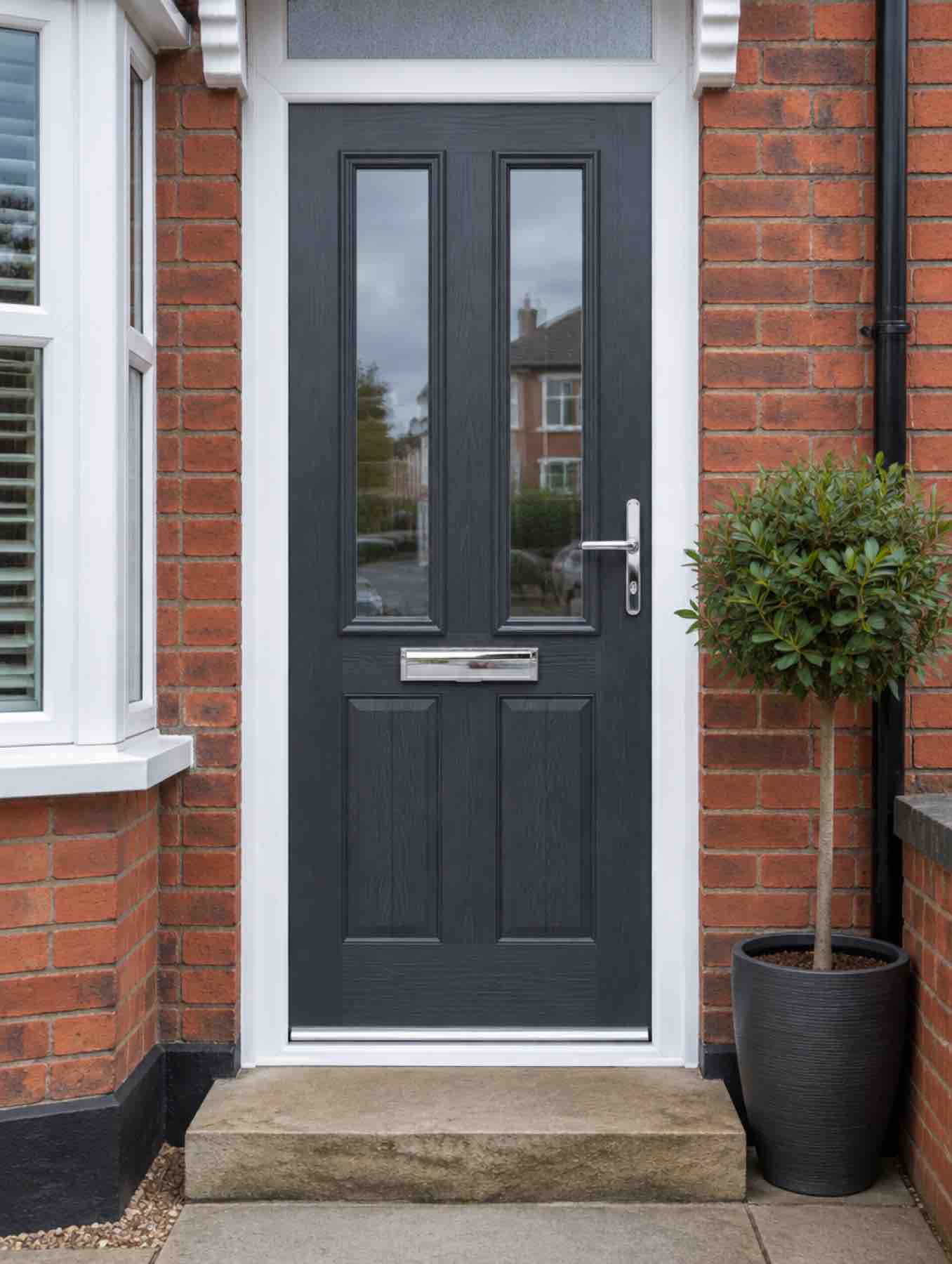
A standard UPVC door and a composite door can look similar in a brochure, but they're built very differently, and after a few North East winters it shows.
A standard UPVC door is built from a single hollow or foam-filled UPVC panel. A composite door is built up in layers: a solid timber or insulated foam core, wrapped in a tough glass-reinforced plastic (GRP) skin, inside a reinforced frame. That layered construction is where almost every difference on this page comes from.
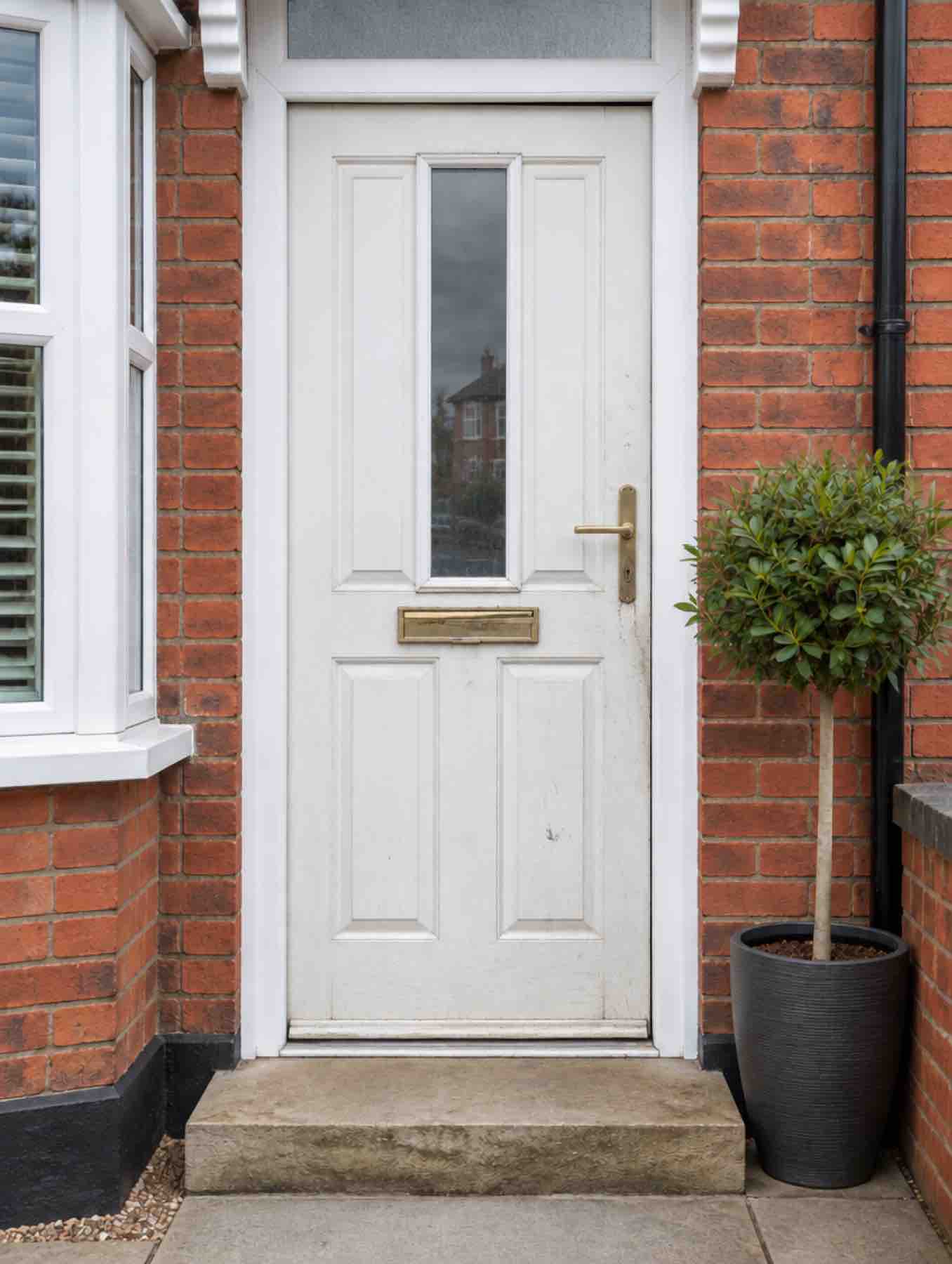
Drag the slider to compare a tired standard UPVC front door with a new composite door in the same opening (illustrative images).
A quick at-a-glance guide, scored out of five.
The solid core makes a composite door far harder to force than a hollow UPVC panel, and every composite door we fit has multi-point locking as standard.
A solid, insulated core doesn't lose heat the way a hollow or lightly-filled panel can, so the hallway stays warmer and draughts stop at the door.
Composite is significantly more rigid, so it doesn't flex, warp or bow the way a UPVC door can after years of sun and rain on an exposed elevation.
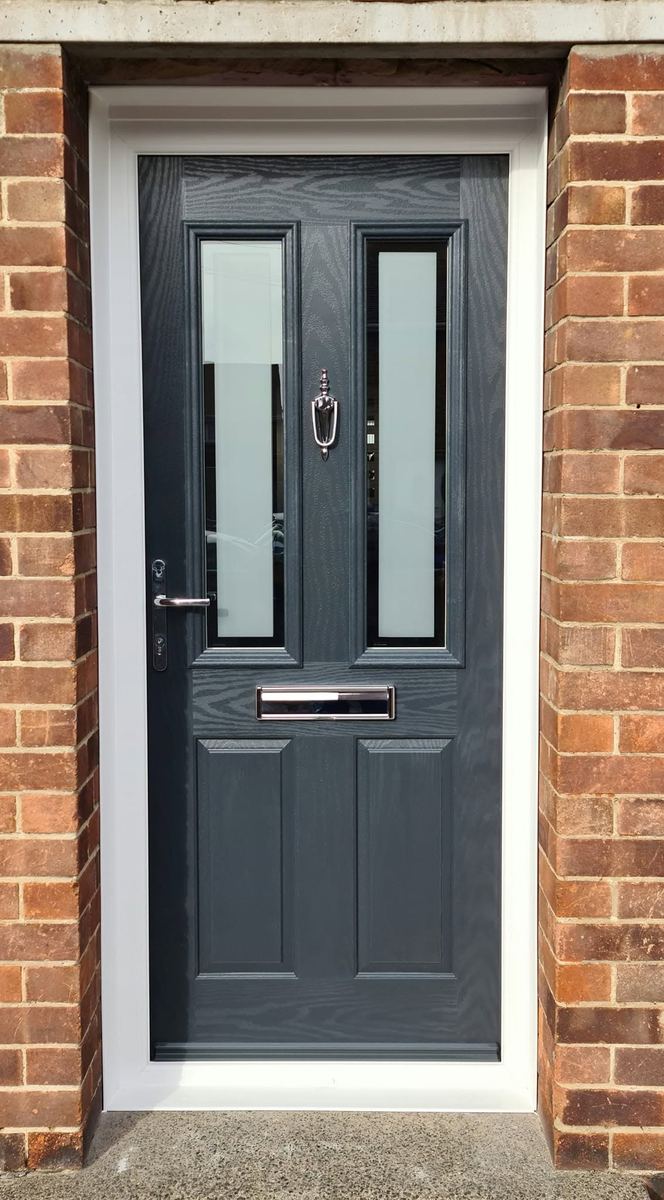
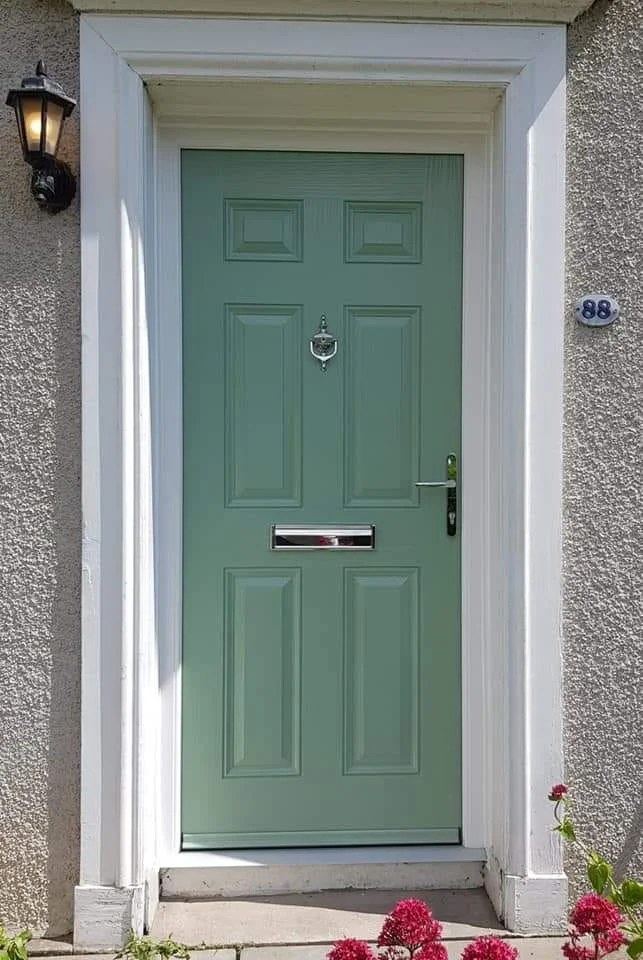
The GRP skin has a realistic woodgrain texture and deep, colour-stable finish. Anthracite grey, chartwell green, deep blue, oak and rosewood are all popular.
With proper fitting and basic care, composite doors typically outlast standard UPVC doors, often performing well for well over a decade.
Both are easy to live with. Neither needs painting. An occasional wipe-down with warm soapy water keeps the finish looking as it did when fitted.
This is the trade-off. Composite costs more upfront than standard UPVC. Our composite and UPVC doors start from £995 including fitting.
Solid core, GRP skin, reinforced frame. Each layer does a job: the core gives rigidity and insulation, the skin gives the finish and weather resistance, and the frame holds it all square in the opening.
Multi-point locking engages at several points along the edge of the door rather than relying on a single latch and deadbolt. For a lot of customers the security improvement over an ageing front door is the main reason to choose composite. The kerb appeal is a welcome bonus.
You get the traditional look many period and character properties suit, without the repainting, the risk of rot or the warping timber doors are prone to in the North East's wetter months.
A door that isn't properly squared in its opening, or not sealed correctly around the frame, will draught and underperform however good the core is. Every composite door we fit is installed by our own experienced tradesmen, not subcontracted out.
For a front door (the one that takes the most weather and the most daily use, and the one that most affects how the house looks from the street), most homeowners decide composite is worth the extra cost.
For back and side doors, where appearance matters less and the door is more sheltered, standard UPVC often remains the more sensible choice. We'll give you an honest comparison for your specific situation rather than a blanket recommendation either way.
Family-run and based right here in Gateshead, we've built our reputation on straight-talking advice, tidy workmanship and fair pricing, not pushy sales tactics.
A trustworthy local company serving Gateshead, Tyne and Wear and the North East.
No fuss, no hassle, just experienced, trusted fitters and tradesmen.
No costly links in the chain, and what you're quoted is what you pay.
DOORS, WINDOWS & UPVC Repairs Throughout Gateshead and the North East. Call Today on 0800 047 2610